3d modelling
Over the last few years of games development at Northbrook college I’ve found my favored aspects of this industry to be 3D Art production, in particular the modeling stage of asset creation. During the Level 2 course and first year of the Level 3 Extended course I have produced environments including various props placed around the scene for which I achieved a very high grade and in my opinion were quite good quality assets however I think environments are not my strong point in modeling and will most likely focus around producing high quality props this year instead. Due to these reasons overall, my profession will be focused around the creation of 3D Assets and Textures.
Workflows
A workflow is a pattern used to organize the way your work is produced. For this task I will be identifying two different workflows and comparing the two, I plan to outline the way we produce our work at college in comparison to an individual in the industry’s.
wargamings 3d workflow
modeling pipeline
Wargaming states in their article that they begin by examining their source material, they are given 3-4 months to study the blueprints and photo of the project they’re working on. After studying the projects blueprints and photos they start on checking alignment of the blueprints to ensure they match the product they’re working on, adjusting features as and when required.

After studying and adjusting blueprints they load the blueprints into Maya and begin creating the model. They also state that they use elements from other models, in this example they state they use elements from other ships such as weaponry, anchoring equipment and more and created a ‘library’ of them allowing them to load them into the scene as reference objects which shorten production time.

The next stage in their workflow is the creation of UV mapping for texturing, they state that texel density is important (relation of texture size to the scale of the model) to maximize efficiency and quality of your textures by packing UV’s as densely as possible.
This is one of the most essential parts of modeling as it requires the most efficient packing taking up as much of the UV space as possible allowing the highest texturing quality.

After unwrapping and packing UV’s they begin texturing their model which they state is one of the most time consuming stage in their production pipeline. Texturing consists of adding elements that weren’t implemented in maya due to polygon limitations including small details which are unnecessary to model. They then begin creating the textures themselves.

All games use LODS which are ‘simplified models with lesser levels of detail shown when the model is at a long distance from the game camera. To put this as basic as possible, when the camera is far away from a model the quality of the model is decreased to improve performance without affecting users immersion as they won’t notice the quality decrease from a distance.

Treehouse’ workflow
Before they start producing they begin by researching the idea in mind typically using google images and creating some sketches of their own. After this they begin ‘Conceptualizing assets’ which essentially means using reference images from multiple sources to create their own sketches and more of their own idea of the chosen asset.

After they have settled on the final look and feel of their product they spend time breaking it down into basic shapes in Maya, which is essentially the blockout stage of their workflow. After the basic shapes of all details of the asset are laid out correctly they begin detailing the asset adding bevels, intrusions and extrusions and more where necessary.

After this they begin organizing their scene, using the outliner in Maya they assign each object a name and group them based on two criteria:
- If objects belong together categorically, such as the knobs on the image above.
- If the objects need to move together such as the antenna on the image displayed above.

Once they are finished modeling and organization they move on the UV mapping, they prefer to keep everything as a single material in one UV map even though most objects are comprised of multiple materials. They state that using a single material makes everything simpler to manage and reduces the storage required in a game and improving rendering performance.
They use a checker pattern to check for stretching on a model which can be seen quite visibly if UV mapping is done incorrectly, this is important to note as keeping stretching can cause distortion on the final texture. They also mention Texel resolution, something stated before in Wargamings article, which is UV size in relation to object size.
After this they begin texturing the asset, however they seem to have finished the article on this stage and therefor have no more to explain on this topic.

conclusion
In conclusion, both of these workflows are quite similar to the one I follow in terms of research, blocking out, modeling, unwrapping and texturing. However they do mention some important aspects of modeling which I didn’t really know before such as LODS which is something I could explore in the future. Although they are both quite good workflows, I do think the first article explains their process far better than the second.#
Historical influences
This task is to research the timeline for my chosen profession discussing the impact of games released throughout the years on how they have impacted my profession in terms of production.
I, Robot – 1983
I, Robot is known for being the first ever produced video game with filled 3D Polygon Graphics with flat shading, Although this was the first ever 3D game produced the game recieved poor reception and wasn’t very successful. Although it wasn’t successful, this game is now well known for its innovative 3D graphics and noted as a classic of its time.
If this game was never made it may have set the industry years behind in terms of 3 dimensional graphics and I would probably not be able to study this form of game art in college.

tomb raider – 1996
Quite possibly one of the most biggest 3D character console game produced and possibly the most successful jumps from 2D graphics to 3D at its time was Tomb Raider, this game was still around when I was younger due to my brothers passing down consoles and therefor I played this game quite a lot. Due to this games immense popularity I personally think this had a huge impact on 3D modelling as developers tend to follow sale spikes thus increasing the

Final fantasy vii – 1997
Personally I think this game has made a huge notable difference within the 3d gaming industry not necessarily due to its innovative 3d graphic style within the game however there are some other aspects of this game which I will further discuss below the image.

The developers for this game attempted to create CGI content for cutscenes and background design. The CGI sequenced a total of 40 minutes of footage however brought with it the added difficulty of keeping the graphics quality of the cutscenes relatively similar to the gameplay or having an un noticeable difference between gameplay and cutscenes.
The video below shows the cutscenes created for this game. Although the graphical quality isn’t entirely amazing I think the fact that they attempted something new and different from other 3D games at the time, I think this deserves a spot on this list as it introduced CGI into video games which is used a great deal in the industry now.
Half-Life – 1998
Since the release of half-life in November of 1998 this game became the fifth best-selling computer game of 1999, noted an ‘instant classic’ and described as the ‘best shooter since the original Doom’ according to Metacritic. Half-life also sparked numerous fan-made mods, several becoming standalone games including the widely popular FPS known as ‘Counter-Strike’
Although the graphics in the video above can be seen as fairly simplistic in terms of nowadays standards of 3-dimensional games, for it’s time I personally think this game was incredibly beautiful and relatively realistic in comparison to games of it’s time.
I never actually played this game however due to such huge popularity and rather good graphical qualities, this definitely deserves a spot on my list of influences to 3D modelling.
call of duty 4 – 2007
Recently call of duty has gone downhill somewhat in terms of content thus making me not want to include this, however this game was one of the first FPS game I ever played which completely blew my mind compared to Halo 2 graphics wise. This game received numerous awards and was the top selling game worldwide in 2007 overall which is extremely impressive considering it was released in November, selling roughly 7 million copies in 3 months. I personally think this had a huge impact on the way 3D modeling has advanced as this was in a way the most innovative first person shooter created thus influencing developers choice toward this genre as well as the huge demand and popularity of first person shooters.

The last of us – 2013
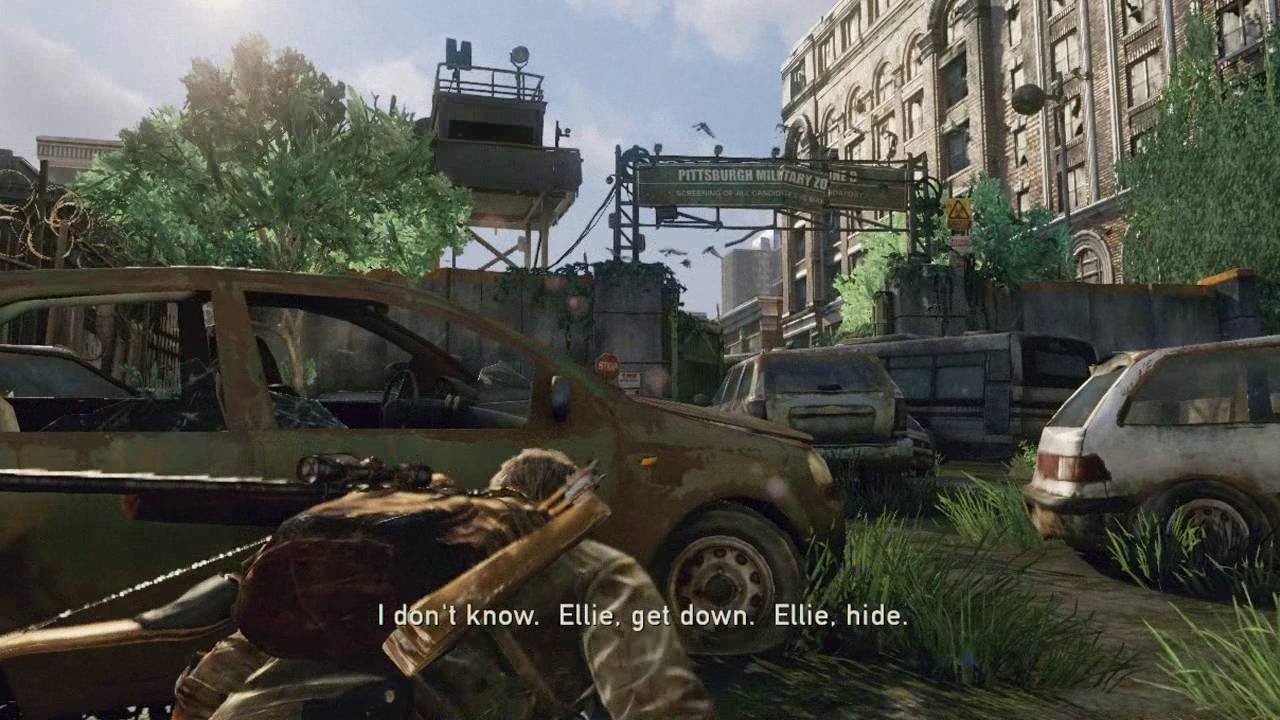
This list was only supposed to have 5 games however I got slightly carried away with older games and just had to add this game as a personal favourite. When this game was first released I was enticed by it’s incredibly beautiful graphics as seen below. This was quite possibly the most amazing game in terms of visuals as well as gameplay/story-line.
As well as incredible graphics, this game used real actors to replicate realistic movement for characters making this game even more immersive.
contemporary influences
The section below is to collect research on contemporary influences for my chosen profession and to identify how they’ve impacted my career.
Throughout the years technological and hardware has advanced at an incredible rate increasing the amount and quality of 3d assets within games, whereas in the past making games 3d was to give off the illusion of 3d using 2d art. Games engine updates have also played an important role in industry as the compatibility and requirements are far greater allowing a higher quality game to be made.
We’ve come a long way since the good old days of 2D gaming such as Pac-man, Space invaders and Mortal Kombat, however due to advances in software allowing you to produce far superior graphical qualities, 2D games are relatively irrelevant in my opinion as you can play such beautiful 3D games such as my all time favorite ‘The Last of Us’ which also has incredible game-play as well as story-line.
 James' 2nd Year - Level 3